
Modern Kitchens 2027: Milan Design Trends and the Future of Kitchen Design
Modern kitchens in 2027 are redefining contemporary design. From the latest concepts presented by Italian brands at Milan's EuroCucina to emerging trends in colors, materials and bespoke kitchen islands, we explore what is changing and how these ideas can work in a modern home.
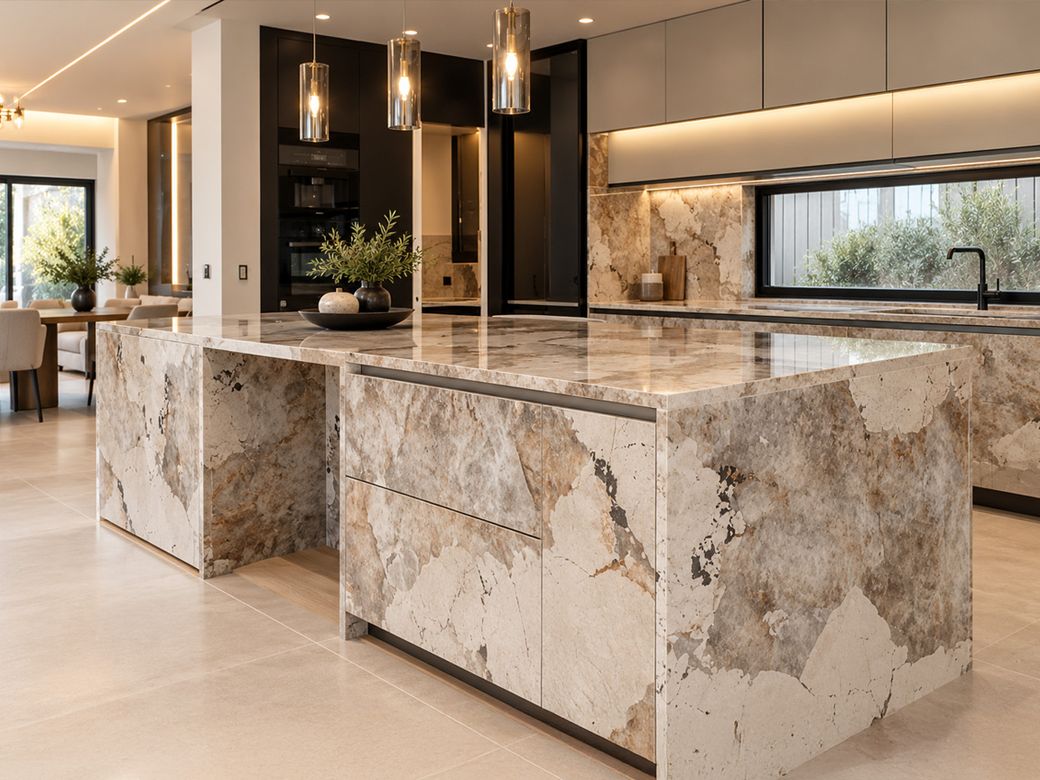
Modern Kitchens 2027: Milan Design Trends and the Future of Kitchen Design
Modern kitchens in 2027 are defined by more than new colors, statement islands or advanced materials. The most important evolution is more fundamental: kitchens are increasingly designed around people's lifestyles, individual needs and the architecture of their homes.
At EuroCucina 2026 in Milan, leading Italian kitchen brands presented new approaches that integrate the kitchen into the wider living environment. Meanwhile, the NKBA Kitchen Trends Report 2027 highlights personalization, organized storage and everyday functionality as important directions for the coming years.
Which of these developments are genuinely worth considering? And how can they be applied to contemporary homes?
1. EuroCucina 2026: The Kitchen Becomes Part of the Architecture
One of the most interesting developments in Italian kitchen design is the gradual softening of traditional boundaries between the kitchen and surrounding living spaces.
With its Spazio Continuo concept, Veneta Cucine presents the kitchen as part of a unified architectural environment, using materials and surfaces to create visual continuity with living areas and even outdoor spaces.
Similarly, Scavolini, through its Flair and Stilo collections, explores a consistent design language that connects the kitchen with other areas of the home.
However, this does not mean that every modern kitchen should be completely open-plan.
According to the NKBA's 2027 research, 81% of the participating professionals consider distinct functional zones to be an enduring design direction.
The key insight is that two approaches can coexist: visual continuity throughout the home and better organization of everyday kitchen activities.
2. Kitchen Islands with Personality: From Zaha Hadid Architects to Everyday Ergonomics
The kitchen island continues to play an increasingly important role in contemporary kitchen design.
A distinctive example is the ONDA collection, created by Febal Casa in collaboration with the international architecture practice Zaha Hadid Architects.
Its flowing surfaces, metallic reflections and sculptural form demonstrate how a functional piece of furniture can become an architectural feature.
This approach does not suggest that every contemporary kitchen needs such dramatic shapes. Instead, it illustrates a broader movement away from strictly standardized compositions.
In the NKBA research, 82% of professionals report that island sizes and configurations are increasingly tailored to available space and individual needs.
A well-designed island should provide adequate circulation, comfortable working conditions and a functional relationship with the rest of the kitchen.
A smaller, carefully planned island can be more successful than a larger one that restricts movement.
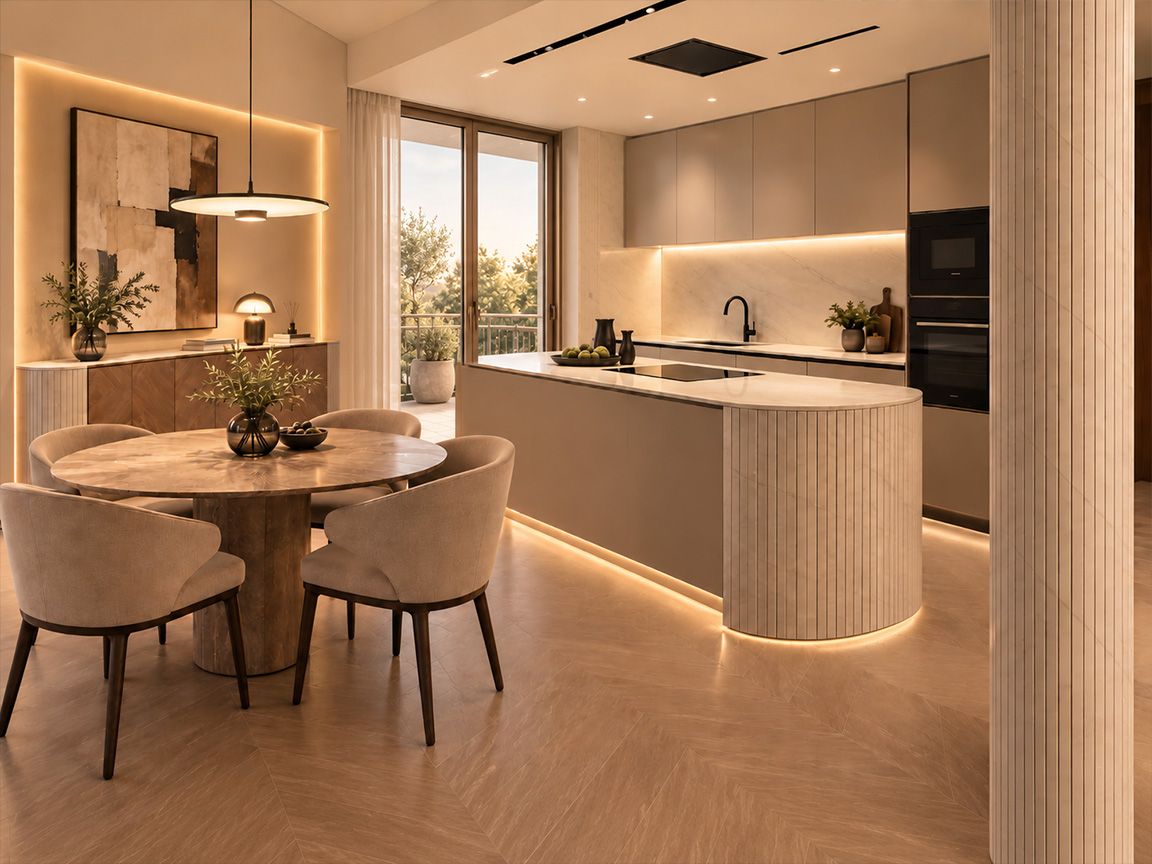
3. Kitchen Colors for 2027: A Return to Natural Shades
Official color announcements for 2027 suggest growing interest in shades inspired by nature.
Benjamin Moore selected Webster Green HC-130 as its 2027 Color of the Year, a deep green with timeless character.
Behr introduced Grounded T27-01, an earthy shade combining mossy green, olive and brown undertones.
These choices do not mean that green will dominate every kitchen. They do, however, indicate renewed interest in natural colors, warm neutrals and combinations with wood and stone.
In kitchen design, these shades can be used selectively: on an island, a bank of tall cabinets or a distinctive group of cabinet fronts.
The final choice should always be assessed using physical samples and the natural lighting conditions of the room.
4. A New Definition of Luxury: Thoughtful Storage
A visually simple kitchen does not have to offer fewer functions.
On the contrary, contemporary kitchens increasingly aim to organize everyday activities while reducing visual clutter.
According to the NKBA, 85% of professionals believe cabinetry design is moving toward concealing appliances and functional elements.
Tall cabinets, internal drawers, dedicated appliance storage and suitable access mechanisms can help keep worktops clear.
The true quality of these solutions, however, depends on how easy they are to use.
Well-organized storage should provide convenient access without unnecessary movements or complicated handling.
5. Natural Materials and Contemporary Surfaces: A Balance of Beauty and Practicality
Recent Italian presentations emphasize the expressive qualities of materials: wood, stone, ceramic surfaces, metal details and tactile finishes.
EuroCucina 2026 also showcased contemporary materials that reproduce the appearance of natural stone while offering different options in terms of maintenance, cost and everyday performance.
For buyers, the most important question is not simply which material looks the most impressive.
It is which material best meets the needs of the space, the preferred maintenance routine and long-term use.
Cabinet fronts, worktops and finishes should therefore be evaluated from both a technical and an aesthetic perspective.
6. Discreet Technology and Lighting with a Purpose
Lighting is becoming an increasingly important part of the overall kitchen experience.
The NKBA research indicates that 84% of professionals expect greater use of layered lighting.
Task lighting, lighting inside selected cabinets and ambient lighting can work together to support different activities throughout the day.
At the same time, kitchen technology is becoming more discreet, with systems designed to provide practical everyday assistance.
Despite the attention surrounding artificial intelligence, AI is not yet a universal priority in kitchen design. In the same survey, only 27% of respondents expect ovens with integrated AI food recognition to become popular.
The conclusion is straightforward: genuine innovation should offer practical benefits rather than visual or technological novelty alone.
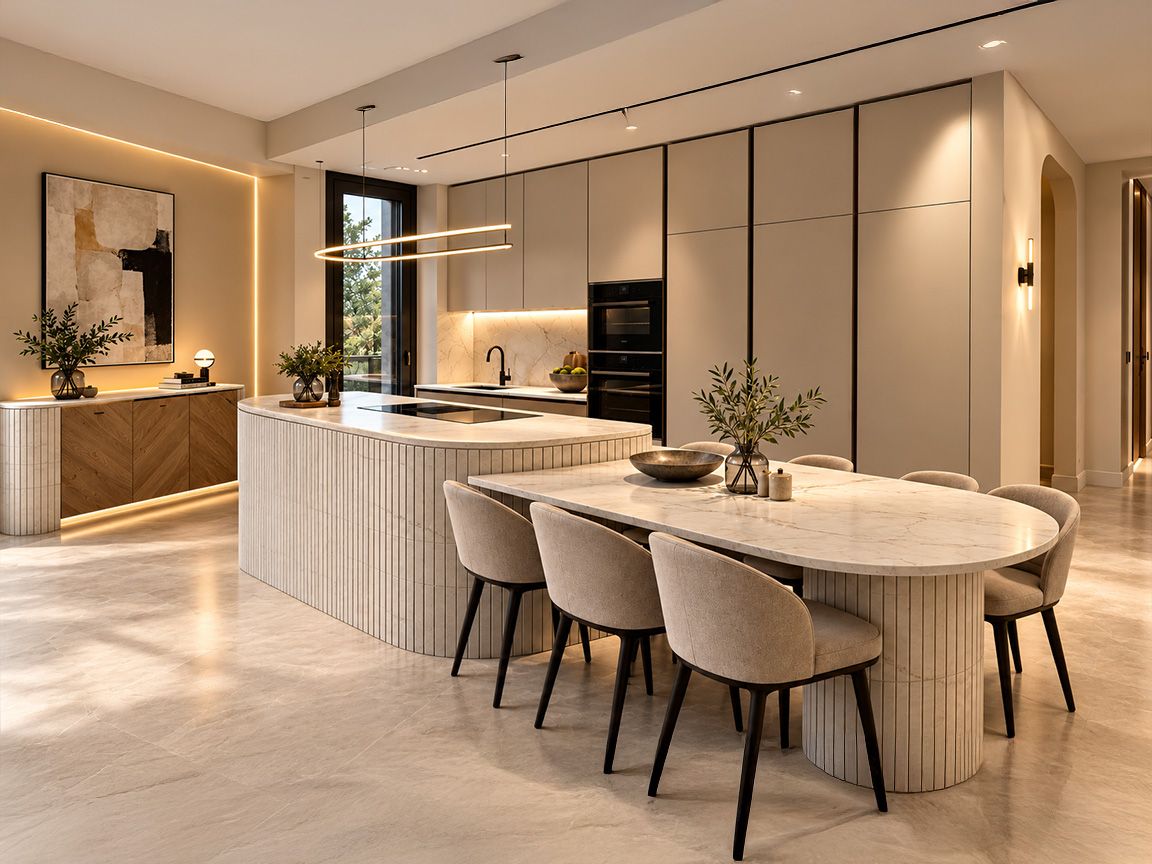
7. Why Bespoke Kitchen Design Comes Before Trends
One of the most interesting aspects of the 2027 trends is that many are not entirely new ideas.
Instead, they highlight principles that have long been fundamental to good kitchen design: personalization, ergonomics, functional storage and harmonious integration with the surrounding space.
These principles are already part of Mebel Arts' design and manufacturing approach.
Through its Any-Size philosophy, Mebel Arts manufactures kitchen furniture in customized dimensions, within the technical limitations of available materials, rather than relying exclusively on standardized sizes.
Greek manufacturing, a broad choice of materials and complimentary 360° 3D design presentations allow proposals to be developed around the specific requirements of each project.
In this way, international trends become sources of inspiration rather than ready-made formulas to imitate.
A new architectural idea may inspire a creative solution, but the final design should always serve both the space and the people who use it.
Conclusion: What Is Really Changing in Modern Kitchens for 2027?
From Italian design exhibitions to international industry forecasts, one important direction stands out: the contemporary kitchen is becoming more personal, functional and architecturally connected to the home.
The trends of 2027 do not prescribe one specific color, material or island shape. Instead, they emphasize thoughtful choices and the ability to adapt.
That is the ultimate goal of contemporary kitchen design: creating a space that remains beautiful and functional beyond passing fashions.
Explore the modern kitchen designs and bespoke manufacturing possibilities offered by Mebel Arts.
Sources
Research and writing: October 2026. International trends and forecasts do not represent measured consumer preferences in the Greek market.